
Project Information
At its meeting on 17 July 2025, Council endorsed the Integrated Transport Strategy (ITS).
Development of the Integrated Transport Strategy
The City of Adelaide developed a new Integrated Transport Strategy (ITS). The ITS reflects contemporary transport thinking and assessment frameworks. The ITS helps to plan streets and movement networks within the City of Adelaide.
There were two key stages in the project to develop the ITS:
Stage 1
Background research, framework development and strategy approach, and discussion papers.
Stage 2
Strategy development.
In stage 1 we received close to 800 contributions, which helped us understand the transport needs and aspirations of our diverse city stakeholders.
While some participants are seeking actions to make driving to/from and through the city more convenient, the overwhelming sentiment from city stakeholders is one of change towards prioritising public transport, walking/wheeling and cycling, and redesigning streets to improve accessibility, safety, comfort and experience for all users.
The key overall themes were:
- Improved public transport with greater reliability, efficiency, connectivity, and user comfort is needed.
- The need for improved cycling infrastructure, including separated east-west cycle lanes.
- Negative impacts of vehicle traffic, particularly through traffic, need to be addressed.
- The management and balance of street space (including car parking) for different uses and users.
- Making streets safe, healthy and connected for all users.
View the Engagement Summary Report here.
In stage 2 we received 188 responses. Key themes arising from the consultation included:
- Reducing car dependency and prioritising active transport
- Loss of car access and increased congestion
- Precinct-specific granularity
- Proactive leadership
- Rapid implementation and ‘quick wins’
View the Engagement Summary Report here.
A new Integrated Transport Strategy (ITS) is needed and will replace Smart Move Transport and Movement Strategy 2012-2022. In line with the City of Adelaide Strategic Plan, the ITS will be bold, aspirational and innovative. The ITS will have alignment with other strategies, including the recently endorsed City Plan and the Integrated Climate Strategy.
The ITS will provide a clear policy position for transport networks and streets. It will also contain network maps and an assessment framework. These will help inform evidence based decision-making and ongoing action and evaluation.

Why do we need a new Integrated Transport Strategy (ITS)?
The Smart Move Transport and Movement Strategy was developed over a decade ago. While many of the Smart Move strategies (outcomes such as ‘easy walking’) remain relevant, a new Integrated Transport Strategy is needed to incorporate new frameworks and directions in transport planning. A new Strategy is required to reflect City Plan and other recent Council Strategies, including the Integrated Climate Strategy.
The new strategy needs to have a stronger focus on accessibility, including gender and child-friendly city considerations. It needs to provide greater clarity about transport networks and the associated infrastructure requirements on the different routes that will meet people’s needs. To achieve desired City outcomes and make it easier for people to choose active and sustainable transport modes we need to know where and how to deliver better streets and transport systems. The ITS will provide an implementation plan so the outcomes and targets set by Council, such as for street greening and transport decarbonisation, can be planned and achieved.
What is the role of the Integrated Transport Strategy (ITS) in relation to City Plan?
The City Plan is the City of Adelaide’s spatial plan for sustainable growth and development of our city. It supports the Council’s target to almost double the resident population of 50,000 by 2036 and growth in people employed in the city from 130,000 in 2021 to over 150,000 employees by 2036. Both City Plan and the ITS align with high level objectives such as climate action, sustainable development and urban growth management with liveability.
The ITS will include principle-based network maps for the different transport modes and places, which will reflect the development set out in City Plan. This will help the City of Adelaide undertake integrated transport planning, urban planning and urban design.
What projects will my feedback inform?
We understand that many people want immediate action to improve transport networks and streets. It is important that Council agree the themes and goals to help confirm a framework for project development and assessment. Based on our shared vision, themes and goals, projects can be identified to achieve them. The assessment framework can then be applied to prioritise projects and recommend an implementation plan.
What is the role of the Integrated Transport Strategy compared with the State’s Transport Strategy?
The State Government has recently released a transport strategy, which covers all State Government transport related issues, such as public transport, arterial roads, active transport and others. The City of Adelaide is responsible for all the streets within the metropolitan Adelaide inner ring road, which is a State owned (arterial) road. The ITS focuses on issues that CoA has care and control over and outline those it might influence or advocate for, such as improved public transport services.
While the City of Adelaide ITS largely focuses on our street and path networks, as a capital city it is vital that we work with the State Government, via the Department for Infrastructure and Transport (DIT), to determine how we efficiently, safely and sustainably help people move between the city and suburbs of Adelaide. Liveability within CoA is important, and DIT and COA will collaborate on improving active travel and public transport to/from and within the City of Adelaide. The State Government and Council meet to discuss community feedback across our respective work.
The State Transport Strategy can be found here.
Stage 2 Update
Stage 2 of the engagement program for the Draft Integrated Transport Strategy concluded on 24 May 2025.
The purpose of this phase was to verify and ground truth the content of the Draft Integrated Transport Strategy and seek feedback on the Themes, Goals and Commitments identified.
Key themes arising from the consultation included:
- Reducing car dependency and prioritising active transport
- Loss of car access and increased congestion
- Precinct-specific granularity
- Proactive leadership
- Rapid implementation and ‘quick wins’
Movement & Access
- Goal 1.2 (“Efficient mass movement of people”) was the most widely supported by the community
- Feedback suggested reducing car ‘use’ is more critical than ‘ownership’
- Stakeholders urged CoA to go beyond advocacy for public transport
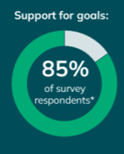
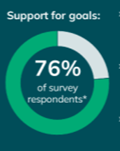
Experience & Place
- Stakeholders noted the interdependencies with other strategies
- Stakeholders suggested a more granular approach to ‘Place’ classifications
- Opportunity to improve clarity of Goal 2.2 (“Integrated transport and land use planning”)
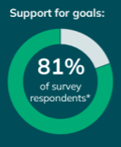
Health & Sustainability
- Strong support for increased greening
- Commitment for public EV charging was the least supported by community
- Stakeholders noted vibrant streets are as important as calm streets
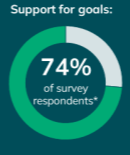
Safety & Comfort
- There was wide-ranging support for implementing the Safe Systems approach
- Some stakeholders questioned the link between proactive safety approaches and greener, quieter, cleaner streets
Community feedback was used to make the following changes to the Draft Integrated Transport Strategy:
- Changes to themes and goals to make the language more understandable
- Modifying commitments around car ownership, Electric Vehicles and through traffic to better align with goals.
- Making measures of success more quantifiable and specific.
- Updates to network maps to increase ease of use and accuracy.
A full summary of the feedback received during consultation can be found here.
Stage 1 Update
Stage 1 engagement took place over four weeks from 4 November 2024 to 2 December 2024, reaching a diverse range of industry stakeholders and our community. Engagement activities included online participation, in-person discussions, and targeted workshops to ensure broad and inclusive input.
You can read the full report here.
Who we heard from
What we heard
Survey topic responses
Document Library
Discussion Papers and Summaries
Stage 2

Stage 1
Consultation Closed
Timeline
-
Timeline item 1 - complete
Community Engagement - Stage 1
November 2024
-
Timeline item 2 - complete
Draft Integrated Transport Strategy Development
December 2024 – March 2025
Feedback received in stage 1 was reviewed and provided to Council to help shape the draft Integrated Transport Strategy.
-
Timeline item 3 - complete
Community Engagement - Stage 2
1 May - 25 May 2025
Community consultation on the draft Integrated Transport Strategy.
-
Timeline item 4 - complete
Delivery of the Integrated Transport Strategy
July 2025
Feedback received in stage 2 was considered when finalising the Integrated Transport Strategy. The final strategy was then be presented to Council for endorsement.
-
Speak with a staff member
Please contact Penelope Bennett, Senior Transport Planner
T: (08) 8203 7857
E: P.Bennett@cityofadelaide.com.au